Entries Categorized as 'Classroom Community'

Forming, Storming, Norming and Performing

October 8, 2011

One of the first things we learned at Heifer was the process of group formation. It was also one of the last things they talked about so it must have been pretty important.

The four steps are:

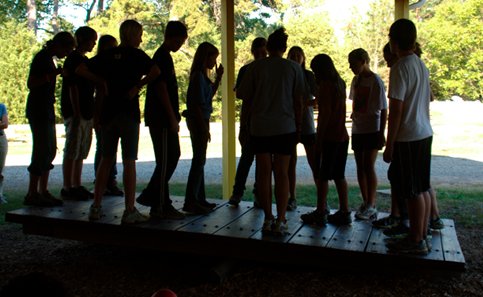
    Forming: Students are quite polite to each other when they first get on the balance board.

  • Forming: When the group first gets together, people tend to be cautious with one another. But because they’re so careful with what they say and what they do, newly forming groups don’t usually get much done.
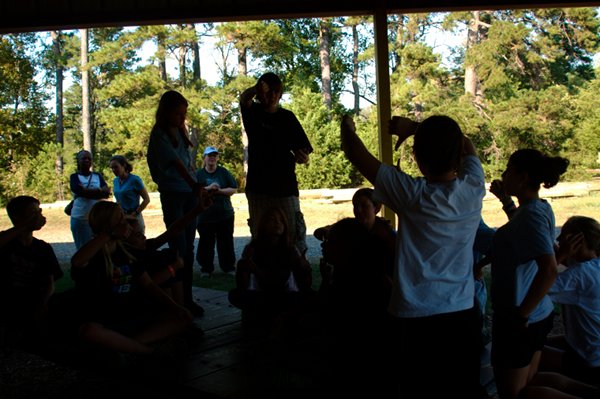
  • Storming: Now the barriers start to break down as individual personalities manifest themselves. People start speaking up. A lot. They become less polite. Conflicts arise. People become accusatory. There’s lots of energy, but because of all the conflict, they still aren’t able to get much done.
  • Storming: Vociferous disagreement breaks out.

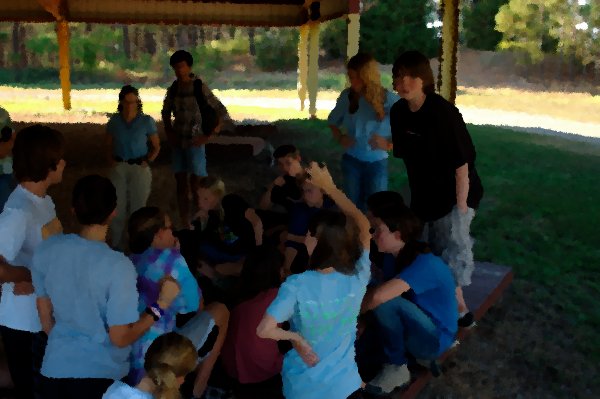
  • Norming: The conflict begins to settle down as the group starts to work out its kinks, as all the individuals begin to adapt to one another. Groups may need guidance to get there because everyone has to stop fighting, but as it usually helps that the group will start to see successes because of successful co-operation.
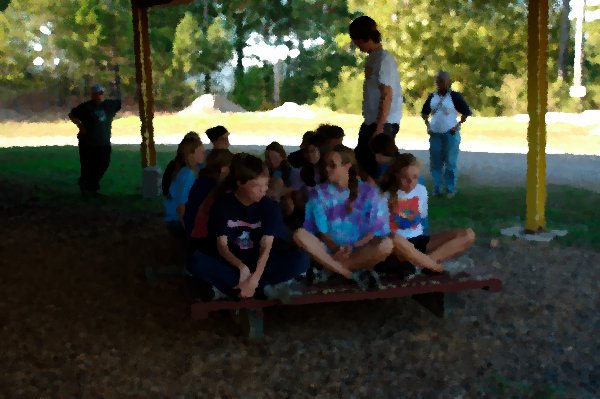
  • Performing: A well-functioning group can get a lot done. They’re able to communicate effectively, and take action effectively. Their productivity kicks into high gear and they can accomplish much together.

Norming: The group begins to organize itself. Rules of order are put in place.

Not all groups get through all four steps, and every time the group changes, such as when a new member (like a new student) is introduced the groups will need to go through some version of the four steps as they learn to accommodate the newcomer.

A well established culture will help groups adapt to change. This is yet another benefit of multi-aged classrooms, because a healthy classroom culture eases the transition as older students leave and new students come in.

Performing: Roles are assigned. Balance is achieved (from 2, to 5, to 57 seconds).

Even so, awareness of the four steps is extremely useful because it helps everyone anticipate that there will likely be some conflict, but that conflict is part of the group forming process and will likely diminish with time.

So you should expect, every year, to have to spend some time group building. Two weeks dedicated to orientation and teamwork is what Betsy Coe’s Montessori Middle School program uses. It’s a fair chunk of time to take out of the year, but because good groups can get so much more done, it’s well worth it to build a good classroom community.

Citing this post: Urbano, L., 2011. Forming, Storming, Norming and Performing, Retrieved May 19th, 2012, from Montessori Muddle: http://MontessoriMuddle.org/ .
Attribution (Curator's Code ): Via: Montessori Muddle; Hat tip: Montessori Muddle.

The Ingredients of “Character”

September 26, 2011

Some key performance-character strengths:

zest, grit, self-control, social intelligence, gratitude, optimism and curiosity.

– Tough (2011): What if the Secret to Success Is Failure? in The New York Times’ Education Issue

Paul Tough’s thought provoking article is a great overview of some of the recent research on character, and discusses a few attempts to instill character building into school.

Levin [co-founder of the KIPP network of charter schools ] noticed that … the students who persisted in college were not necessarily the ones who had excelled academically at KIPP; they were the ones with exceptional character strengths, like optimism and persistence and social intelligence. They were the ones who were able to recover from a bad grade and resolve to do better next time; to bounce back from a fight with their parents; to resist the urge to go out to the movies and stay home and study instead; to persuade professors to give them extra help after class.

– Tough (2011): What if the Secret to Success Is Failure?

Much of the work on character is based on the universal character characteristics identified in the book Character Strengths and Virtues: A Handbook and Classification (Peterson and Seligman, 2004) and the research of Angela Duckworth (her research page is a good place to find copies of her publications).

Duckworth’s Grit Scale, seems to be a remarkably good predictor of GPA, and perhaps more interestingly, corresponded inversely to the number of hours of television students watched: “gritter” students did better in school and watched less TV.

Among adolescents, the Grit–S [short Grit Scale] longitudinally predicted GPA and, inversely, hours watching television. Among cadets at the United States Military Academy, West Point, the Grit–S predicted retention.

– Duckworth and Quinn (2009): Development and Validation of the Short Grit Scale (Grit–S)

The grit survey would probably be a useful addition to the Personal World curriculum.

One interesting application discussed in the article is at the KIPP middle schools in NYC. There they issue a Character Report Card and integrate discussion of character into all the classes: a language class might talk about how much self control the protagonist in a novel has and how that works out for them.

I’d be extremely reluctant to have to grade my students on twenty four character traits. While it might be a useful rubric to have and discuss and build on students’ positive self-conceptions, I fear that it might also significantly reinforce the negative conceptions as well.

Imbuing a language of character as a subtext of the curriculum seems like a great idea however.

Performance vs. Moral Character

One important critique of much of this work is that it focuses on “performance” character, the character traits that predict high achievement, rather than “moral” character which focuses on the ability to work well with others.

These two perspectives on the same character traits need careful attention. From a performance perspective, social intelligence, can be seen as a way of getting ahead – something that is somewhat manipulative, but from a moral perspective, social intelligence is intrinsically beneficial to the person and the society around them.

And perhaps this is the biggest problem with performance-character. It is extrinsically motivated: do this and you will get this reward. The intrinsic nature of moral-character seems much more in line with a progressive approach to teaching. Certainly, much care should be taken in how we think about and include character building in education.

The Character Education Partnership has a number of lesson plans and best practices for all grade levels, that focus more on moral character.

Giving Students the Opportunity to Fail

Finally, Tough talks about the fact that students need the time and space to explore, try difficult things, and to fail, in order to really build character.

The idea of building grit and building self-control is that you get that through failure, and in most highly academic environments in the United States, no one fails anything.

– Dominic Randolph (2011) in Tough (2011): What if the Secret to Success Is Failure? in The New York Times’ Education Issue

This is tied into the central theme of the movie Race To Nowhere and the book The Price of Privilege, that argue that, for many affluent students, the stress of excessively high academic expectations are having some seriously negative effects.

People with self-respect have the courage of their mistakes. – Joan Didion (1961), via Word on the Street (2010)

(hat tip to Ms. D. for the link to the article)
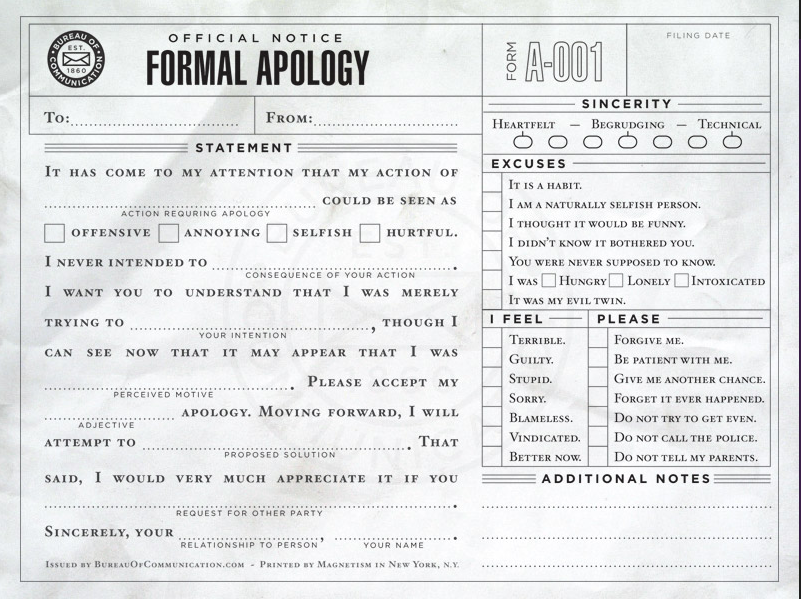
Citing this post: Urbano, L., 2011. The Ingredients of "Character", Retrieved May 19th, 2012, from Montessori Muddle: http://MontessoriMuddle.org/ .
Attribution (Curator's Code ): Via: Montessori Muddle; Hat tip: Montessori Muddle.

Scaffolding and Peer-learning: Thinking about Vygotsky’s “Zone of Proximal Development”

July 12, 2011

When a student is struggling with a problem, and they just need that little boost to get them to the next level, they’re in Vygotsky’s Zone of Proximal Development, and it’s appropriate for the teacher to give them that crucial bit of help. The idea implies that students really have been trying to solve the problem so the help they get will be useful.

It also implies that the teacher can recognize precisely the help they need and deliver it, which is often easier than it sounds. As an adult, from a different generation and culture, and with more experience with these problems, I see problems very differently from my students. Indeed, experts solve problems by developing rules of thumb (heuristics) that speed problem solving by amalgamating large volumes of information. Unfortunately, for these heuristics to be meaningful, students often have to arrive at them themselves. Thus the student looking at the details is unable to communicate effectively with the expert who sees the big picture.

Peer-Teaching

One remedy Vygotsky advocated was peer-teaching. By letting students of similar but differing abilities work in groups, they can help each other: often a lot more effectively than a teacher would be able to. The teacher’s main interventions can be with the more advanced students who do not have anyone more knowledgeable to help, but who are best able to communicate with the teacher because of a smaller knowledge gap.

Practically, this suggests multi-aged classrooms, and a high level of vertical integration of the subject matter. Consider, for example, which topics from algebra, geometry and calculus might be appropriate for students from middle to high school to be working on together at the same time in the same room.

Scaffolding

Another, more typical, approach to this problem would be to provide all the extensive scaffolding – all the information including explicit demonstrations of ways of thought – that students need to get started, and then gradually take the scaffolding away so that they have to apply it all on their own.

In a high school laboratory science class, a teacher might provide scaffolding by first giving students detailed guides to carrying out experiments, then giving them brief outlines that they might use to structure experiments, and finally asking them to set up experiments entirely on their own.

Slavin (2005) (online resources): Classroom Applications of Vygotsky’s Theory.

In Combination

Elements of both these approaches are necessary – and they’re not mutually exclusive. The scaffolding perspective is most important when introducing something completely new, because they’re all novices at that point. But as you build it into the classroom culture in a multi-aged classroom where there is institutional memory and peer-teaching, then the job of the teacher evolves more into maintaining the standards and expectations, and reduces (but does not eliminate) the need for repeatedly providing the full scaffolding.

Citing this post: Urbano, L., 2011. Scaffolding and Peer-learning: Thinking about Vygotsky's "Zone of Proximal Development", Retrieved May 19th, 2012, from Montessori Muddle: http://MontessoriMuddle.org/ .
Attribution (Curator's Code ): Via: Montessori Muddle; Hat tip: Montessori Muddle.

Coon Creek Immersion: Visiting the Cretaceous

April 1, 2011

70 million year old shell and its imprint collected at the Coon Creek Science Center.

Just got back from our immersion trip to collect Cretaceous fossils at the Coon Creek Science Center, and hiking in Natchez Trace State Park.

It was an excellent trip. Despite the cold, Pat Broadbent did her usual, excellent job explaining the geology of Coon Creek and showing us how to collect and preserve some wonderful specimens. Back at the cabins, we looked at some of the microfossils from the Coon Creek sediments (and some other microscopic crystals); similar fossils can tell us a lot about the Earth’s past climate.

Back at the Park, we traced a streamline from the watershed divide to its marshy estuary, and cooked an excellent seafood dinner as we learned about the major organ systems.

Dinner was delicious.

Our trip was not without difficulties, however. The group learned a bit more about self-regulation, governance and the balance of powers, as a consequence of “The Great Brownie Incident,” and the, “P.E. Fiasco.”

We were also fairly well cut off from the “cloud”: no internet, and you could only get cell reception if you were standing in the middle of the road in just the right spot in front of Cabin #3.

But more on these later. I have some sleep to catch up on.


View Coon Creek Immersion in a larger map

Citing this post: Urbano, L., 2011. Coon Creek Immersion: Visiting the Cretaceous, Retrieved May 19th, 2012, from Montessori Muddle: http://MontessoriMuddle.org/ .
Attribution (Curator's Code ): Via: Montessori Muddle; Hat tip: Montessori Muddle.

Lets have a RATIONAL Argument

March 23, 2011

Excerpt from a flow chart on how to have a rational argument by Brandon Scott Gorrell.

Brandon Scott Gorrell has produced a wonderful salvo for our never-ending efforts to promote rational discussion.

Citing this post: Urbano, L., 2011. Lets have a RATIONAL Argument, Retrieved May 19th, 2012, from Montessori Muddle: http://MontessoriMuddle.org/ .
Attribution (Curator's Code ): Via: Montessori Muddle; Hat tip: Montessori Muddle.

Moral Development in the Brain

January 28, 2011

If someone takes something of yours from your locker, does it matter if they intended to steal, or if they grabbed it by mistake because they thought it was their locker? We see there is a moral difference here, because people’s intentions and beliefs matter. An inadvertent mistake is one thing, but intentionally stealing is another.

We can see the difference, but typically, children under six do not. They see both things as just as bad, because they do not consider intentions.

The temporoparetial junctions. Image by the Database Center for Life Science, via Wikimedia Commons.

A recent study (Young et al., 2010) found the part of the brain that seems to be responsible for the consideration of intentions in moral judgment. This part of the brain, the right temporoparietal junction, develops between the ages of six and eleven.

I find this work fascinating because it implies that adolescents may still be developing the ability for deeper moral judgment when they get to middle school. It would help explain why they will sometimes make the argument that if the outcome did no harm then any transgression does not matter; taking something from someone’s locker is not that important if they get caught at it and have to return it.

Just like adolescents have to exercise our abstract thinking skills in order to fully develop and hone them, students probably need to practice and think about what morality means.

I think I’m going to have to figure out a framework for talking about morality for next cycle’s Personal World.

Note: Another interesting article on the role of the temporoparietal junction in meta-cognition.

Citing this post: Urbano, L., 2011. Moral Development in the Brain, Retrieved May 19th, 2012, from Montessori Muddle: http://MontessoriMuddle.org/ .
Attribution (Curator's Code ): Via: Montessori Muddle; Hat tip: Montessori Muddle.

The positive side of teasing

January 17, 2011

Teasing, under some circumstances, might actually help people bond. At least according to Dacher Keltner of the Greater Good Science Center.

Teasing can be a way to diffuse embarrassing situations, but its effect depends very much on the context and the culture. The outstanding question is how we differentiate positive teasing among friends from verbal attempts to bully. Part of the answer to this question lies in the effect: does the teasing contribute to group cohesion, or does it isolate and exclude?

Citing this post: Urbano, L., 2011. The positive side of teasing, Retrieved May 19th, 2012, from Montessori Muddle: http://MontessoriMuddle.org/ .
Attribution (Curator's Code ): Via: Montessori Muddle; Hat tip: Montessori Muddle.

Boys, girls, and blogs

January 10, 2011

There’s a curious and clear gender difference when it comes to my student’s use of their blogs. All the girls have them and most are posting things right now, but the boys don’t.

This is in large part due to the way I rolled out the student blogs. I started with a couple students (girls) who were most interested, and since then I’ve been setting up blogs for students as they’ve been requested. The process has been slow because I’ve been trying the multi-user version of WordPress (WPMU), which is not nearly as easy to set up as a stand-alone WordPress installation (like the one used for the Muddle). I think, however, that I have the setup process worked out now, so I could accelerate the rollout if necessary.

Since the two students I started with were girls, it’s perhaps not too surprising that it’s the other girls who were most interested in getting their own. That’s the way the social connections are arranged in our class.

Scattergram showing how girls' (red) brains mature differently than boys' (blue). Data from Lenroot, 2007.

Though there’s no real evidence for it, I do wonder, however, if there is a gender component to it too. Since girls tend to develop more quickly than boys at this age (see Sax, 2007 for a general description, and NIH, 2010 for a recent overview of adolescent brain development), so perhaps they’re more self-reflective. Girls also tend to emphasize interpersonal relationships more (e.g. Johnson, 2004), and are generally more communicative.

… females (1) develop more intimate friendships, (2) stress the importance of maintaining intimacy, and (3) expect more intimacy in their friendships than do males. — in Gender, grade, and relationship differences in emotional closeness within adolescent friendships by Johnson, (2004)

At any rate, I’m curious to see how this develops. I think I’m going to remind the whole class about the blogs though.

(Excel Spreadsheet used to create the brain volume scattergram: here.)

Citing this post: Urbano, L., 2011. Boys, girls, and blogs, Retrieved May 19th, 2012, from Montessori Muddle: http://MontessoriMuddle.org/ .
Attribution (Curator's Code ): Via: Montessori Muddle; Hat tip: Montessori Muddle.

Creative Commons License
Montessori Muddle by Montessori Muddle is licensed under a Creative Commons Attribution-Noncommercial-Share Alike 3.0 United States License.