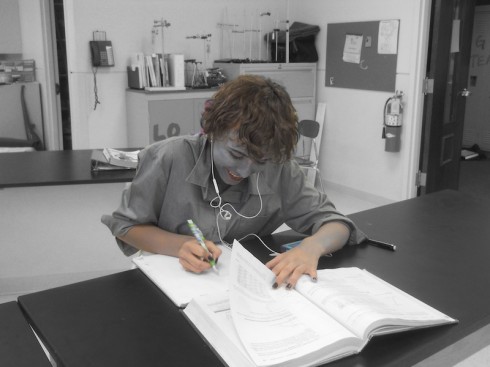
Last Wednesday was “Decades Day”. It was a part of homecoming week. There were lots of 80’s hair and socks, but one student chose to a bit further back. Far enough back to be expressed in black and white.
Middle and High School … from a Montessori Point of View
Last Wednesday was “Decades Day”. It was a part of homecoming week. There were lots of 80’s hair and socks, but one student chose to a bit further back. Far enough back to be expressed in black and white.
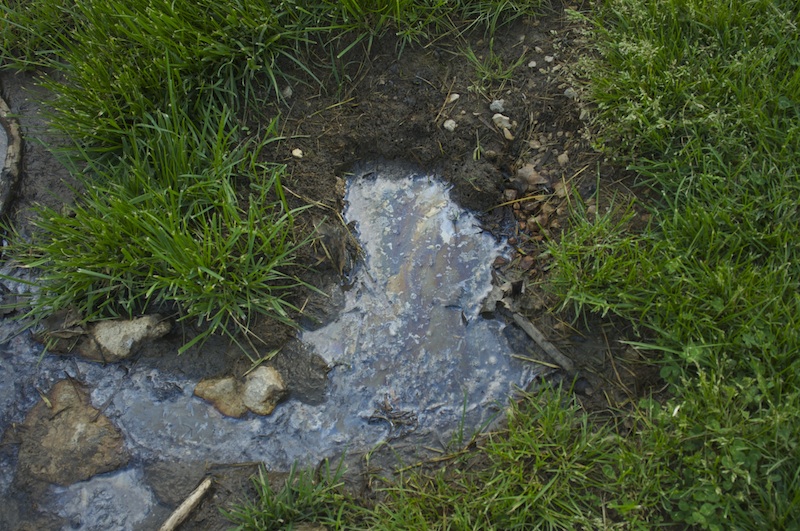
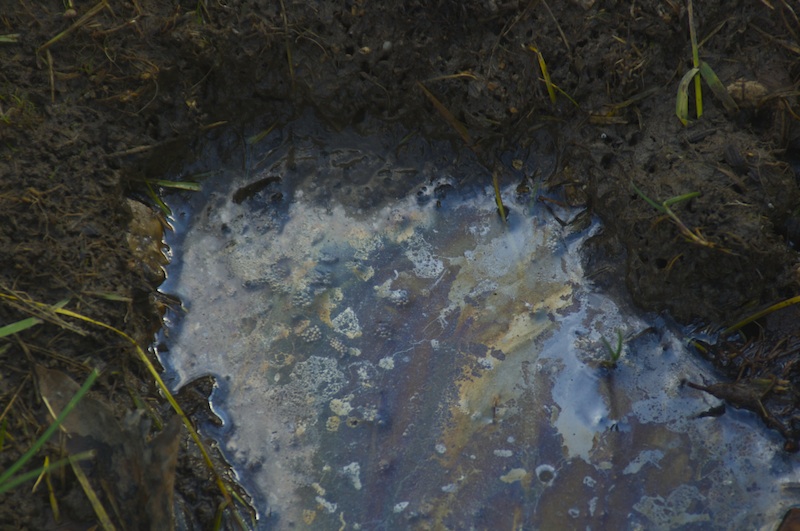
The organic matter that’s been decaying over the winter is being forced to the surface by the spring’s rising groundwater table. In places of near stagnant water the oily products of decay leave a sheen of oils on the water surface.
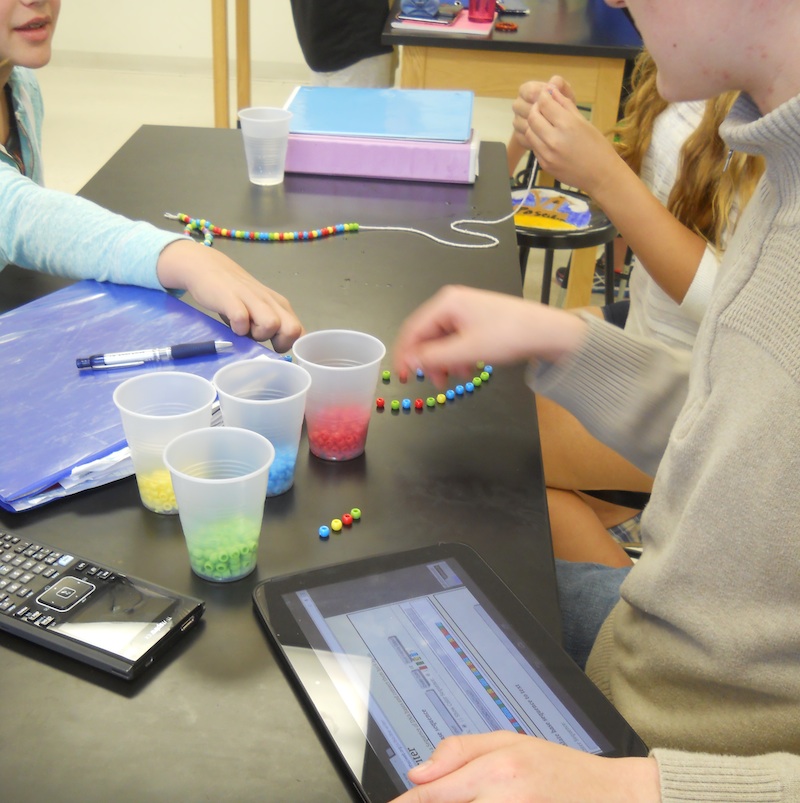
Meiosis is a little hard to explain and follow, even with the videos to help, so I thought I’d try a more concrete activity — making DNA strands out of beads — to let students use their hands to follow through the process.
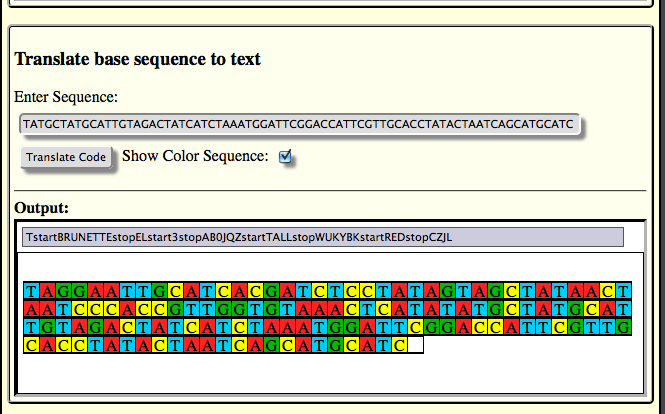
I started them off making a simulated human with four genes. They got to choose which genes, and they went with: hair color, number of eyes, height, and eye color. Then each group picked a different version of the gene (a different allele) for their person. Ravenclaw’s, for example, had brunette hair, three eyes, was tall, and had red eyes. Using the DNA Writer translation table , which maps letters and text to codons, they were then able to write out a string of DNA bases with their person’s information. I had them include start and stop codons to demarcate each gene’s location, and put some non-coding DNA in between the genes.
Ravenclaw’s Sequence
TAGGAATTGCATCACGATCTCCTATAGTAGCTATAACTAATCCCACCG
TTGGTGTAAACTCATATATGCTATGCATTGTAGACTATCATCTAAATG
GATTCGGACCATTCGTTGCACCTATACTAATCAGCATGCATC
Since DNA is made up entirely of only four bases (A, C, T, and G), students could string together a different colored bead for each base to make a physical representation of the DNA strand. To make this a little easier, I adapted the DNA Writer to print out a color representation of the sequences as well. Most of the students used the color bars, but a few preferred to do their beading based off the original sequence only.
Just the beading took about 40 minutes, but the students were remarkable focused on it. Also, based on students’ questions while I was explaining what they had to do, the beading really helped clarify the difference between genes and alleles, and how DNA works.
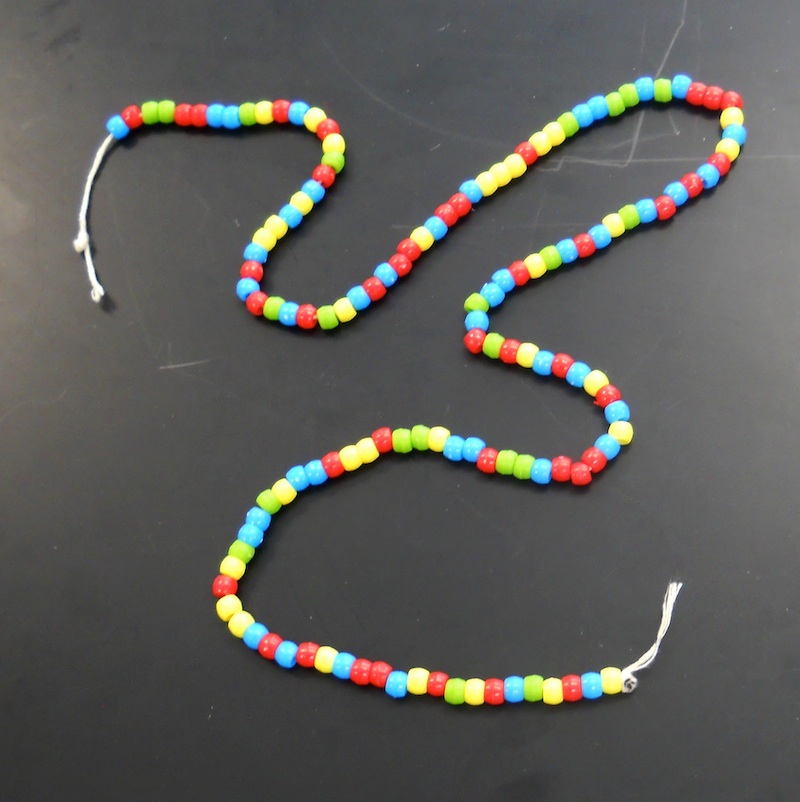
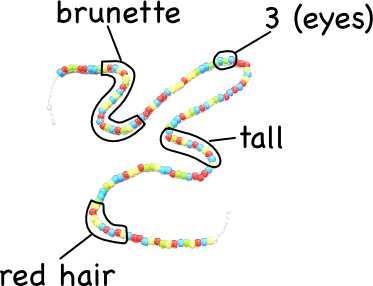
Each of these DNA strands represents the half-sequence that can be found in a gamete. Next class, we’ll be using our DNA strands to simulate fertilization, mitosis and meiosis. Meiosis, should be most interesting, since it is going to require cutting and splicing the different strands (to simulate changing over), and following the different alleles as four new gametes are produced. This will, in turn, lead into our discussion of heredity.

I remember driving around town looking at the lights … arcs of dias sitting on split-bamboo trellises … everywhere. Hundreds and thousands of little flickering lights.
I remember refilling the oil in the dias and replacing the wicks as they went out.
I remember attending prayers, and eating good food — curry, dal, rice, roti — with my hands off banana leaves.
I found a new Indian/Pakistani grocery last week, just in time for Diwali. Diwali’s got elements of Thanksgiving (harvest feast), Christmas (lights and some present giving), and New Years (in some parts of India). Mostly, I remember it as the Festival of Lights. So, I picked up six dias at the store, and improvised with cooking oil and string (for the wicks), so my kids could have their chance to play with fire.
I think I’ll bring them into school too. Last week the middle schoolers attended a diversity conference. They didn’t seem to get too much out of it, so I’ve been trying to be a little more explicit about the subject.
Beethoven – Ode to Joy
Time to recharge.
For every action there is an equal and opposite reaction.
— Newton’s Third Law of Motion
I introduced my Middle Schoolers to the principles of Newton’s Laws of Motion last week.
The discussion started off with projectiles. If you’re floating in space — zero gravity — and throw something, like a basketball, away from you, you’ll be pushed off in the opposite direction. In fact, if you throw something that has the exact same mass as you do away from yourself, you’ll move off in the opposite direction with the exact same speed as the thing you threw.
Then I brought up rockets, and how they’re expelling gas to move them forward. I think it was the phrase, “expelling gas” that did it. The next question, which the student brought up somewhat circumspectly, sidling around the issue and the language, was (more or less), “So if you expel gas in space will you move off in the other direction?”
The simple answer, appropriate to that stage of the discussion, was, of course, “Yes.”
Which lead to to, “What about spitting?”
“Yes.”
“What about, you know, peeing?”
“Yes, except …”
At that point I thought it would be wise to rein it in a little, and make a further point about the whole action-reaction thing.
“You see, if you expel anything, wouldn’t it just be stuck in your spacesuit with you? Then you’re not really expelling it, it’s still attached to you, so you wouldn’t really move. What would be more useful would be to collect it in something like a spray can or a squeeze bottle. Then you can just squirt it out opposite the direction you want to go in to control your movement.”
This produced a moment of thoughtful silence as they figured out the logistics.
I thought this was a useful conversation to have. The students were interested and animated. And I believe it’ll be memorable too.
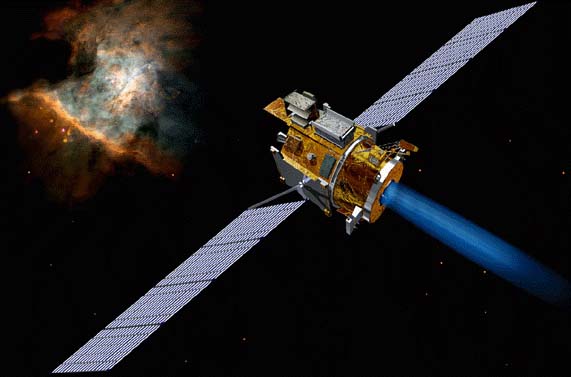
P.S.: I’d wanted to talk about ion drives, which operate on the same reaction principle, but are much cooler (after all they’re used in Star Trek). Instead of burning fuel to create the propulsive force ion drives generate an electric field that ejects charged particles; we’d been talking about ions and charged particles earlier in the day. However, I decided on the day that it would just complicate what was a new issue. I’ll probably bring it up this week though as we recurse through Newton’s Laws.
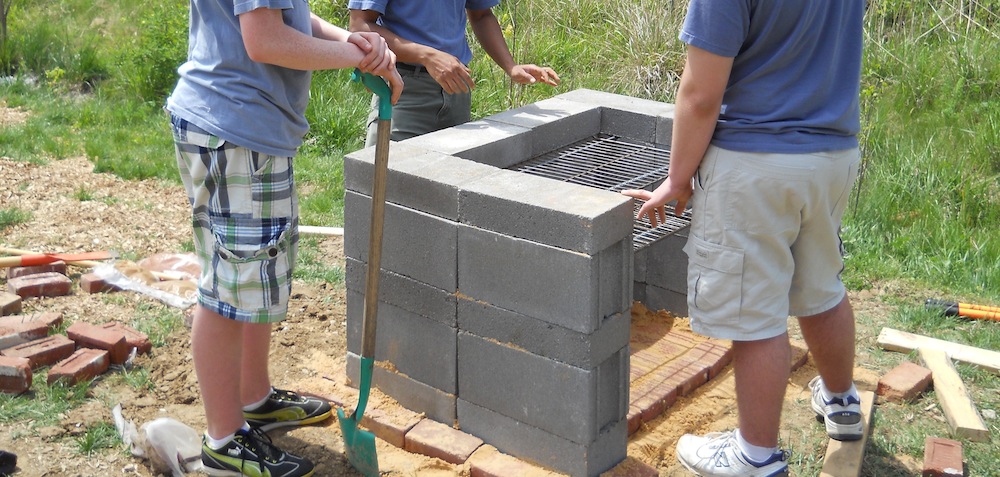
It took us a little more than half a day to build a grill. It’s a simple thing of cinder blocks and sand, located near the soccer field so it’ll be convenient for bbq’s next year.
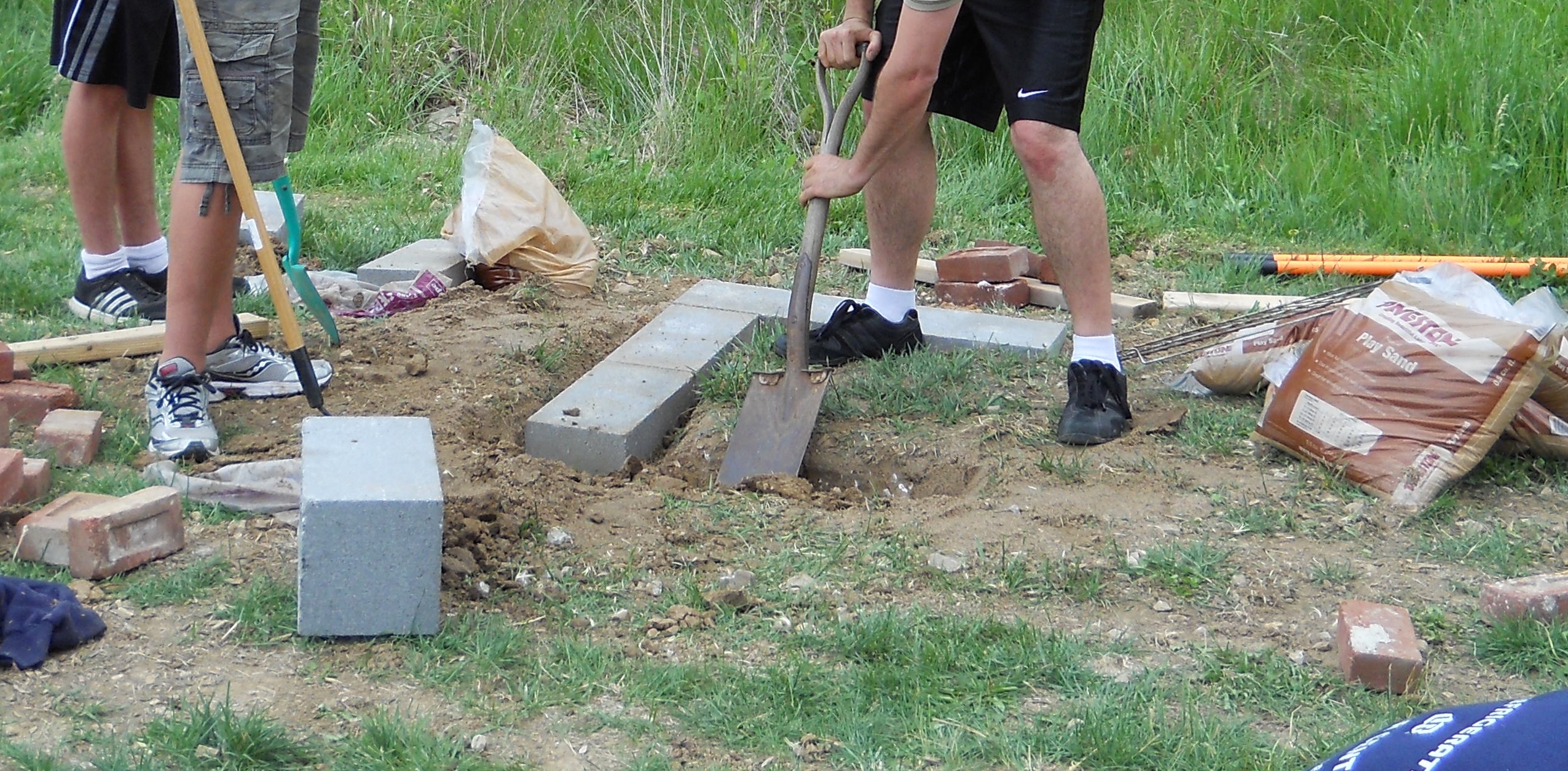
It took the highschoolers all morning to dig an outline for the base of the grill and lay in the foundation, despite it being a small, three-quarters of a rectangle shape, and only ten centimeters (4 inches) deep at maximum. The local clay is extremely dense and hard.
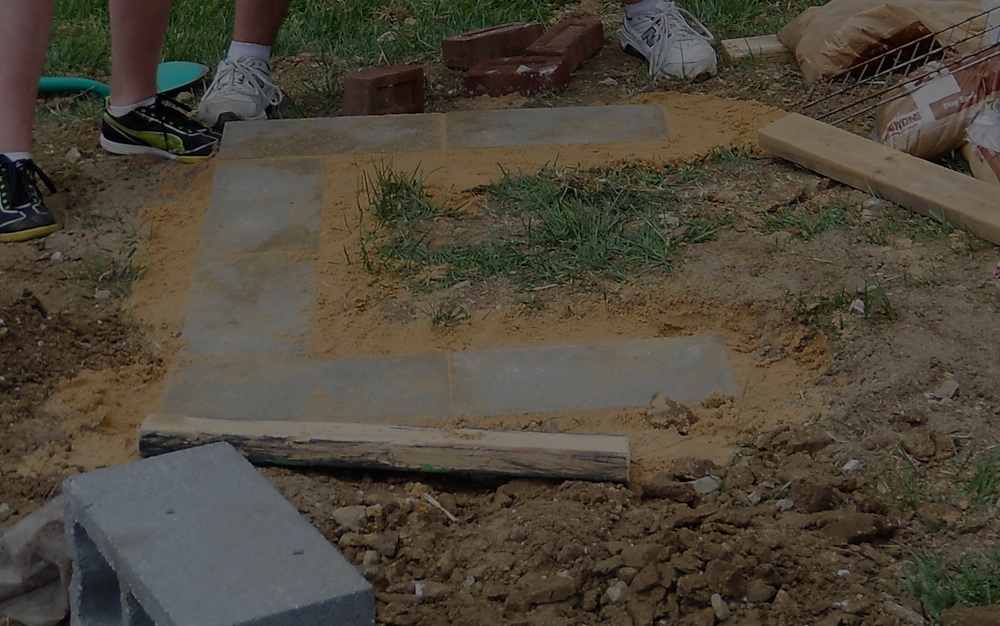
But the foundations were firm, secure, and level.
When the base was done, two middle-schoolers — ably documented by a peer photographer — finished all the visible parts of the structure in just half an hour.
The next day, after I’d given them a presentation on cognitive development during the teenage years that I realized how nice a metaphor the grill construction was for the training of the brain during adolescence. The extensive pruning and myelination that typifies adolescence establish neural pathways are the foundation for future mental growth.
Good, strong, level foundations are the basis for a rich and fulfilling life.
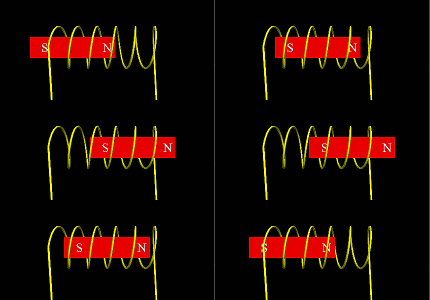
My students asked me this question the other day, and while slapping together an animation of electromagnetic induction I gave it some thought.
This program itself is really simple. It took about 15 minutes.
But that’s not counting the half hour I spent searching the web for an image I could use to illustrate magnetic induction and not finding one I could use.
Nor does it count the four hours I spent after I got the animation working to get the program to take screen captures automatically. Of course, I must admit that figuring out the screen captures would have gone a lot quicker if I’d not had to rebuild all my permissions on my hard drive (I’d recently reformatted it), and reinstall ImageMagick and gifsicle to take the screen captures and make animations.